If you’ve shopped for a custom phone case recently, you’ve probably noticed “MagSafe compatible” showing up everywhere. It sounds like a must-have upgrade — but is it actually worth the extra cost, or just marketing? Here’s the honest breakdown.
What Does a MagSafe Case Actually Do?
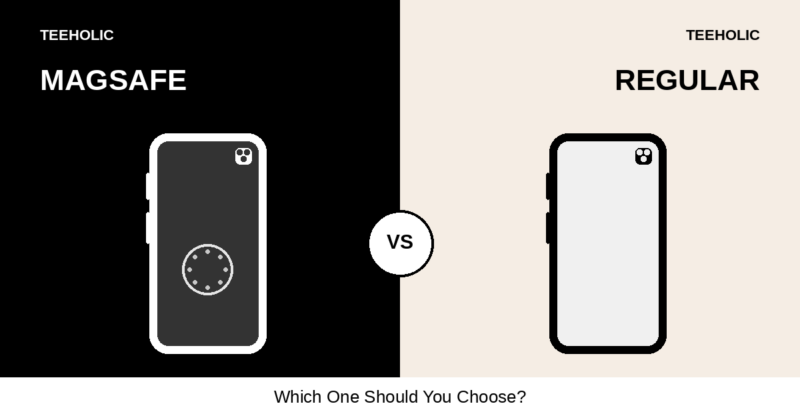
A MagSafe (or magnetic) case has a ring of magnets embedded in the back. That ring snaps securely onto MagSafe-enabled chargers, car mounts, wallets, and battery packs — everything aligns automatically instead of you fumbling to center a charging pad in the dark. It’s a small thing, but if you’ve ever tried to line up a wireless charger one-handed at a red light, you know exactly why it matters.
MagSafe vs Regular Phone Case: Side-by-Side

note the embossed magnetic ring

smooth back, no ring
Here’s how the two options stack up feature by feature:
The short version: MagSafe cases add snap-on convenience and slightly better wireless charging alignment. Regular cases are more universal, usually a little slimmer, and cost less.
What’s the Price Difference?
On GTTG, magnetic cases run about $8–9 more than their non-magnetic counterparts — Tough Phone Cases start at $24.99, while the Magnetic Impact-Resistant option is $32.99. If you already lean on wireless charging and magnetic mounts daily, that gap pays for itself in convenience. If you rarely use them, that same $8–9 is better spent on a higher protection tier instead.
The Truth About Durability
Here’s the part most buying guides skip: MagSafe has nothing to do with how well a case protects your phone. Protection comes down to material and build quality — a hybrid or polycarbonate MagSafe case isn’t automatically tougher than a well-made regular case in the same material. In fact, some of the toughest cases don’t have MagSafe at all, and some of the slimmest MagSafe cases offer only basic scratch protection. Read the protection level, not just the feature list.
One Important Limitation
Magnetic cases are currently available for iPhone only, since MagSafe is an Apple-specific technology built into the phone itself. Galaxy S22, S23, and S24 owners get every other benefit — great material, custom design, strong protection — just not the snap-on magnet ring. That’s not a downgrade, just a different feature set.
So, Which One Should You Choose?
Pick a MagSafe / magnetic case if you already use MagSafe accessories, charge wirelessly every night, or want the convenience of snap-on mounts in your car or at your desk.
Pick a regular case if you want the slimmest possible fit, you’re on a Galaxy phone, or you’d rather put the savings toward a better protection tier instead of the magnet feature.
Either Way, Make It Yours
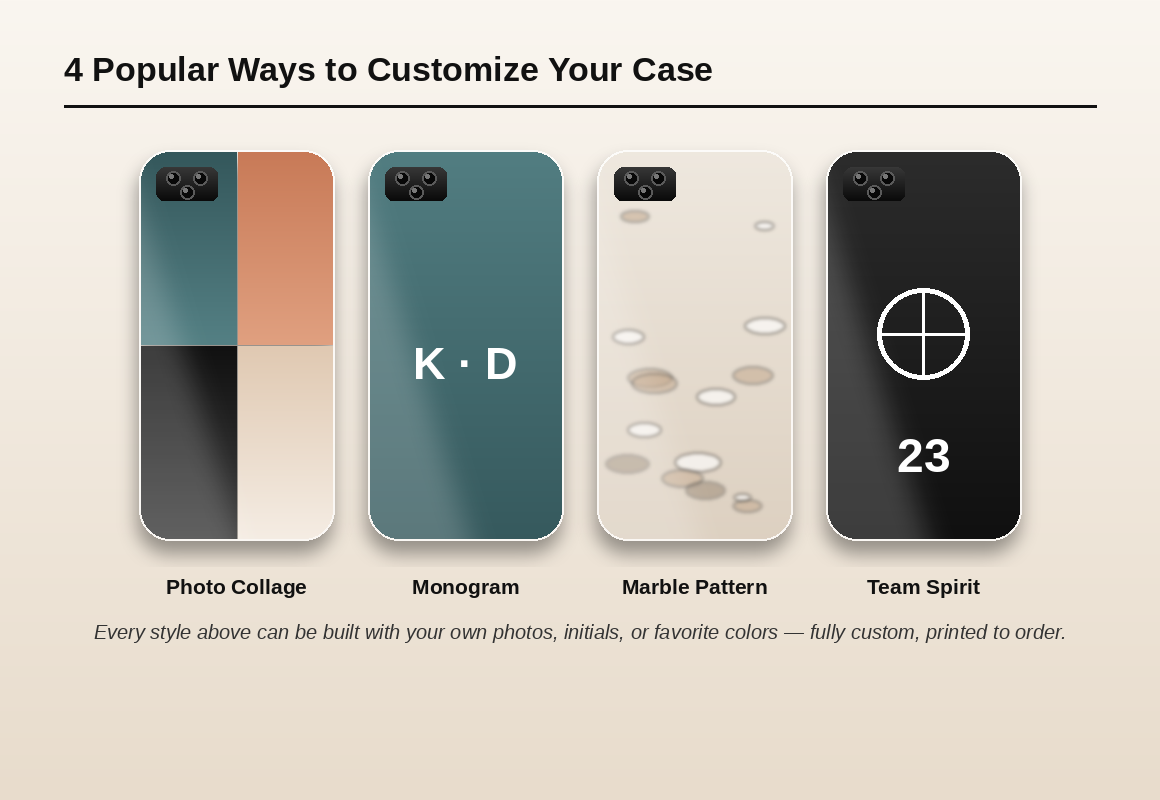
MagSafe or regular, every GTTG case is custom-printed to order. Here are four of the most popular ways customers personalize theirs:
BUILD YOUR CASE — MAGSAFE OR REGULAR →
Bottom line: a magsafe vs regular phone case decision usually comes down to how you charge and mount your phone day to day. If you already own MagSafe accessories, or plan to, the ring pays for itself the first week. If you do not and have no plans to, a regular case saves a couple of dollars without giving up any of the print quality, color options, or drop protection.
Quick FAQ
Does MagSafe work through a thick case? Yes, as long as the case is designed for MagSafe — the magnets are built into the case itself, so alignment and charging speed stay reliable even with drop protection built in.
Can I add MagSafe later if I buy a regular case? Not directly — the magnet ring has to be built into the case during manufacturing, so if you want MagSafe convenience, choose one of the magnetic case options upfront.
Both options are available fully custom at GTTG — same photo-upload process, same fast build flow, just a different back panel underneath your design. Still deciding on materials and protection levels in general? Our complete buyer’s guide covers that in depth.